Expositions
Exposition en cours
De Vimy au front intérieur
Réservez votre visite
Exposition en vedette
Expositions
Exposition en cours
De Vimy au front intérieur
Réservez votre visite
Le rôle des femmes
Le rôle des femmes
Découvrez le rôle essentiel qu’ont joué les femmes durant la Première Guerre mondiale et comment leurs contributions ont transformé la société canadienne.
La vie sur le front
Plongez dans le quotidien des soldats pendant la Première Guerre mondiale. À travers des récits personnels et des artéfacts, découvrez leur résilience, leurs sacrifices et les défis vécus sur les lignes de front.
La vie sur le front
Opérations canadiennes
Explorez l’évolution de la technologie et des tactiques militaires canadiennes pendant la Première Guerre mondiale. Découvrez l’impact du Canada sur la guerre à l’échelle mondiale et son émergence en tant que puissance militaire reconnue.


2026.01 | Gift of Jacques Lirette
CCGW Collection
The Kodak Folding Camera was introduced by the Eastman Kodak Company in 1903 and underwent several redesigns, with production continuing until 1943.
This Canadian model dates to around 1914. It uses 122 film, a postcard-size format that allowed negatives to be printed directly onto postcards. In the same year, Kodak introduced its autographic system, which enabled photographers to inscribe written information directly on the negative. Using a metal stylus, text could be entered through a small slot in the camera and would appear along the margin of the developed print.
Portable and relatively easy to use, these cameras enabled soldiers to produce their own photographs during the First World War. They played a key role in preserving personal memories and experiences of the conflict all while setting the stage for photography’s enduring place in postwar commemoration.


List of Passengers on the Ascania, highlighting the Newell Family, 1936
2017.20 | Gift of John R. Newell
CCGW Collection


CCGW Collection

Newell Family's Pilgrimage Suitcase, 1936
2017.20 | Gift of John R. Newell
CCGW Collection


Selected Photos from the Pilgrimage, 1936
2017.20 | Gift of John R. Newell
CCGW Collection
Born in England, Harry Robert Newell enlisted in Ottawa in August 1917, aged 29, and served as part of the Signal Training Depot of the Canadian Engineers. As a First World War veteran, he embarked on the 1936 Vimy Pilgrimage with his wife Mary Frances, daughter Jocelyn and son John.
The photographs displayed were taken by his son, John Newell, only 13 years old at the time. Many of these are annotated with names and locations, offering a personal perspective on the journey. In 1942, John joined the Royal Canadian Air Force, becoming a flight instructor during the Second World War. Before his health declined, he was set to return for the centennial anniversary of the Battle of Vimy Ridge, 81 years later, in 2017.


Booklet of Itinerary to the Cemeteries, 1936
CCGW Collection


Commemorative Ashtrays and Medals, 1936
CCGW Collection


Selected Canadian Legion Button Pins from the Vimy Pilgrimage, 1936
CCGW Collection


CCGW Collection


2025.06 | Gift of Debby McCracken
CCGW Collection


Booklet of Itinerary to the Cemeteries, 1936
CCGW Collection


Commemorative Ashtrays and Medals, 1936
CCGW Collection


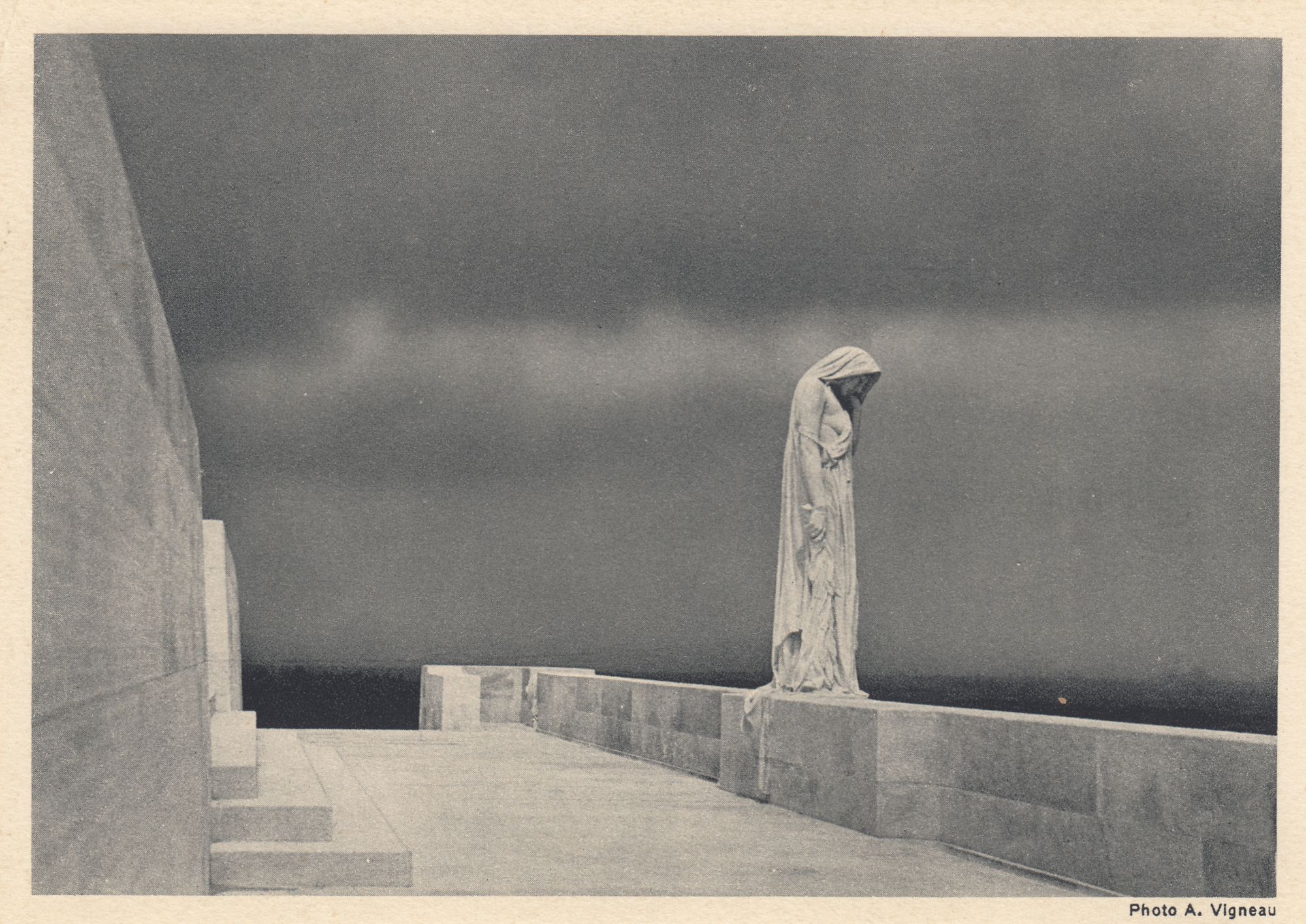
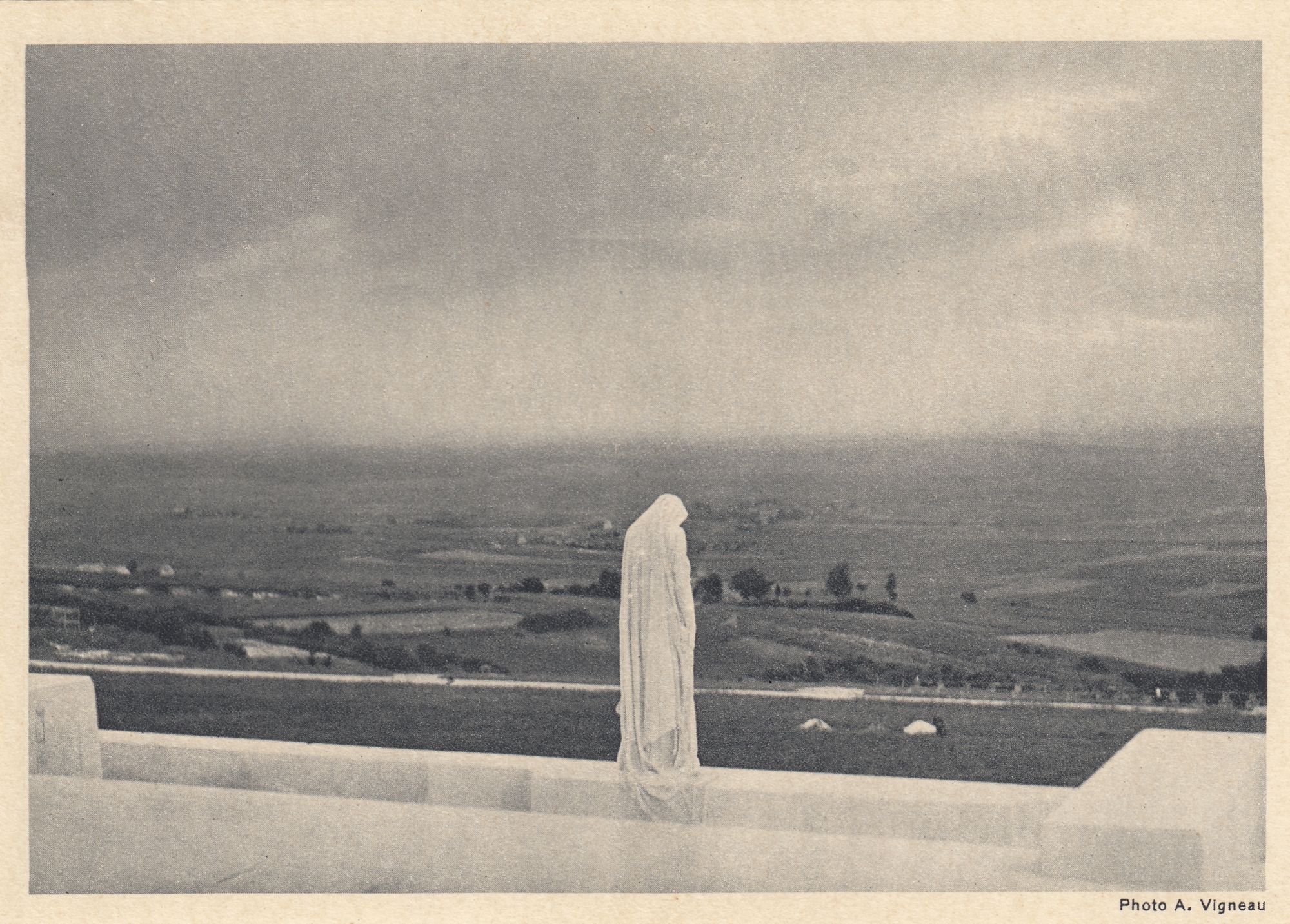
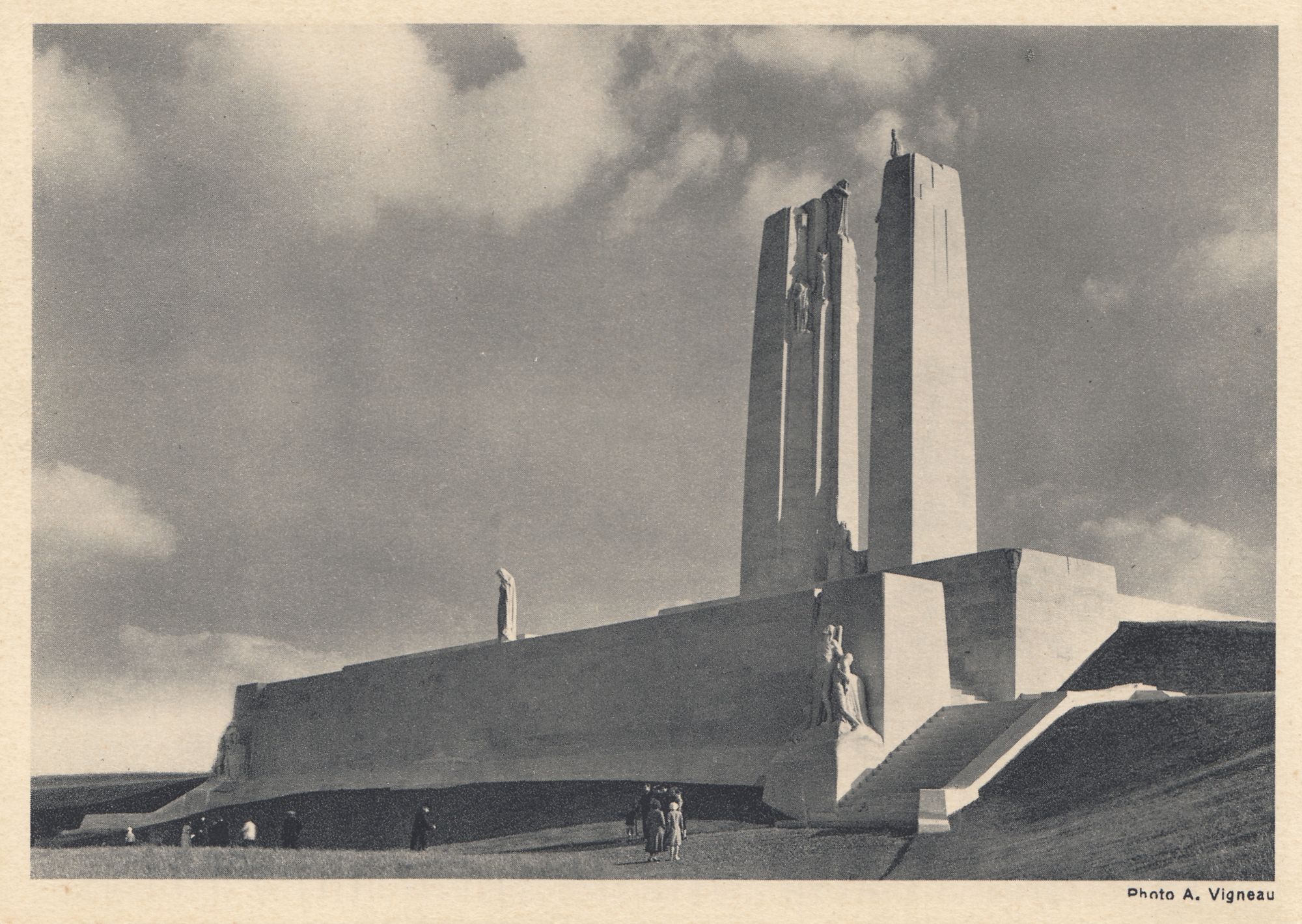
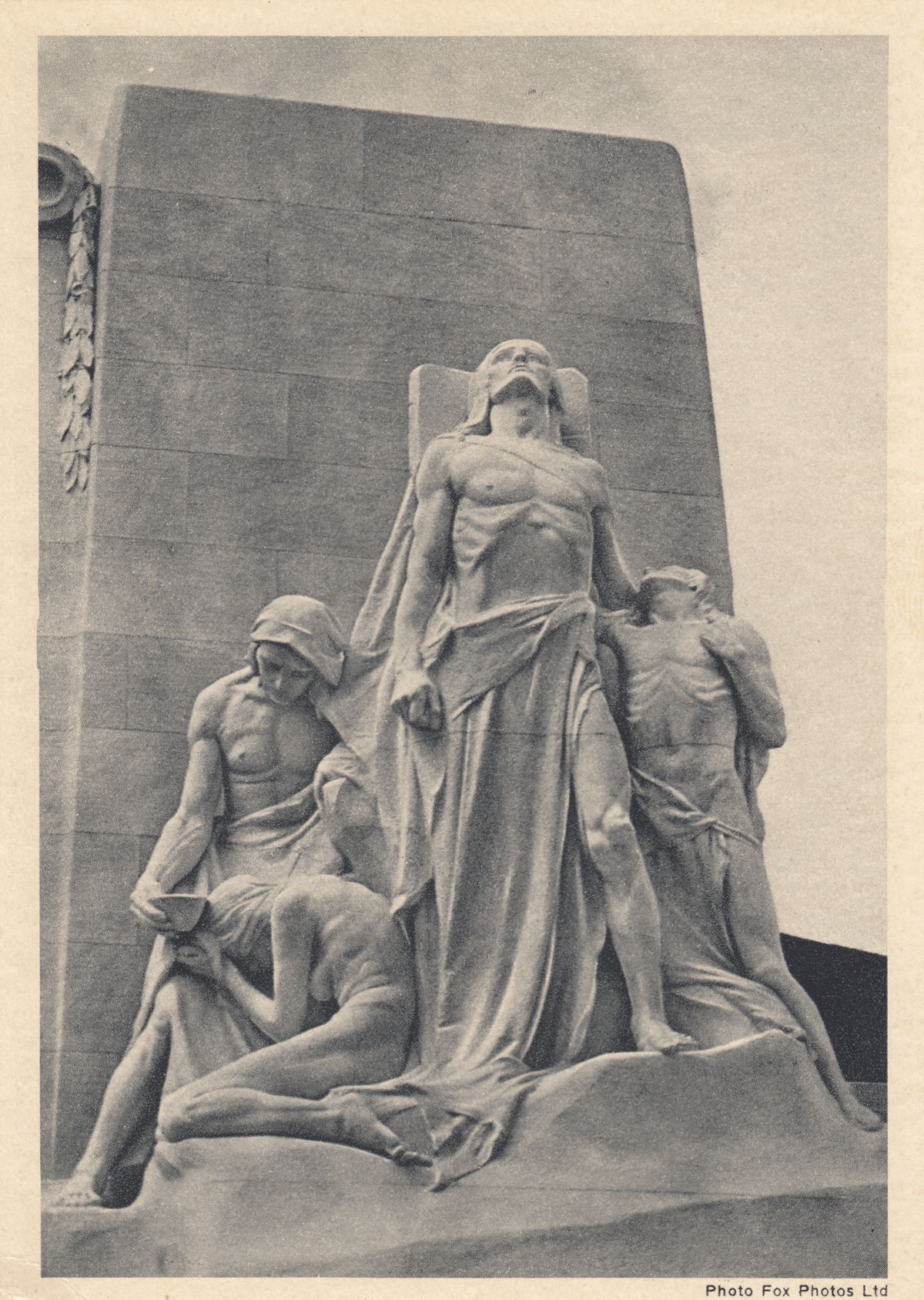
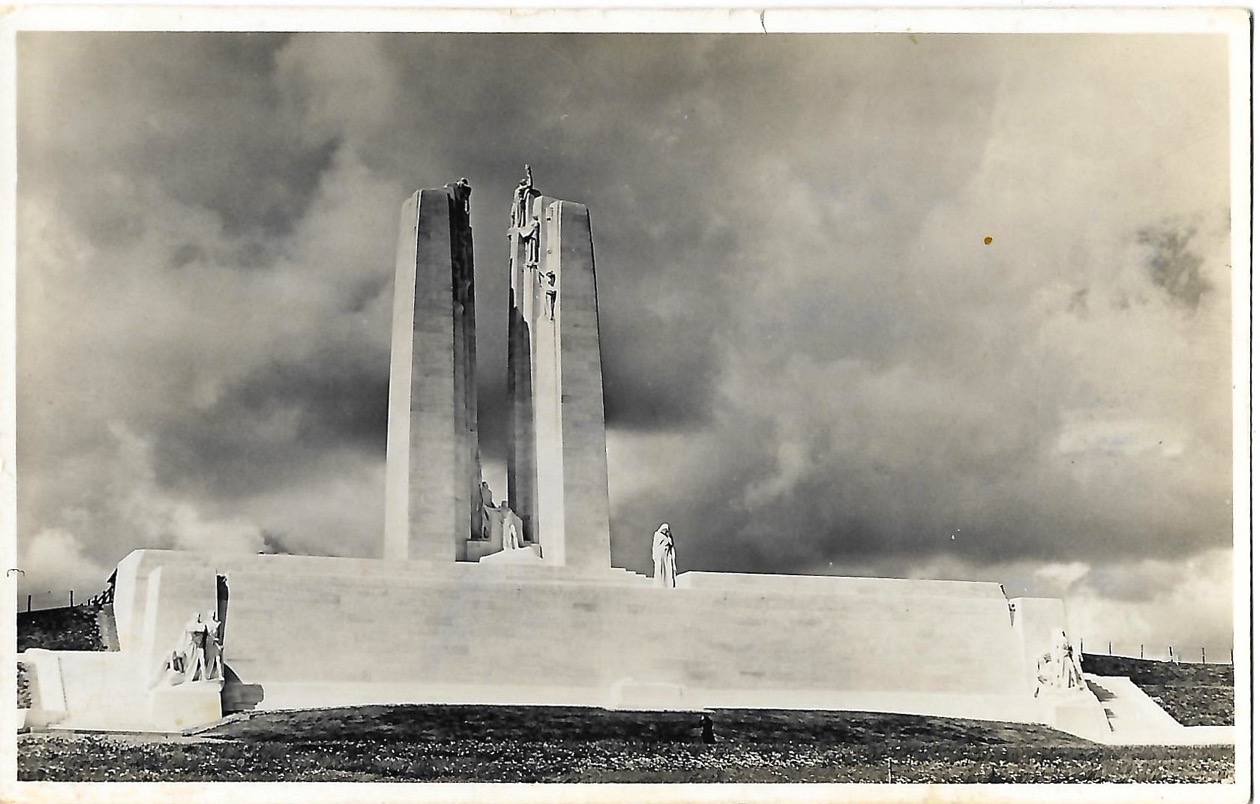
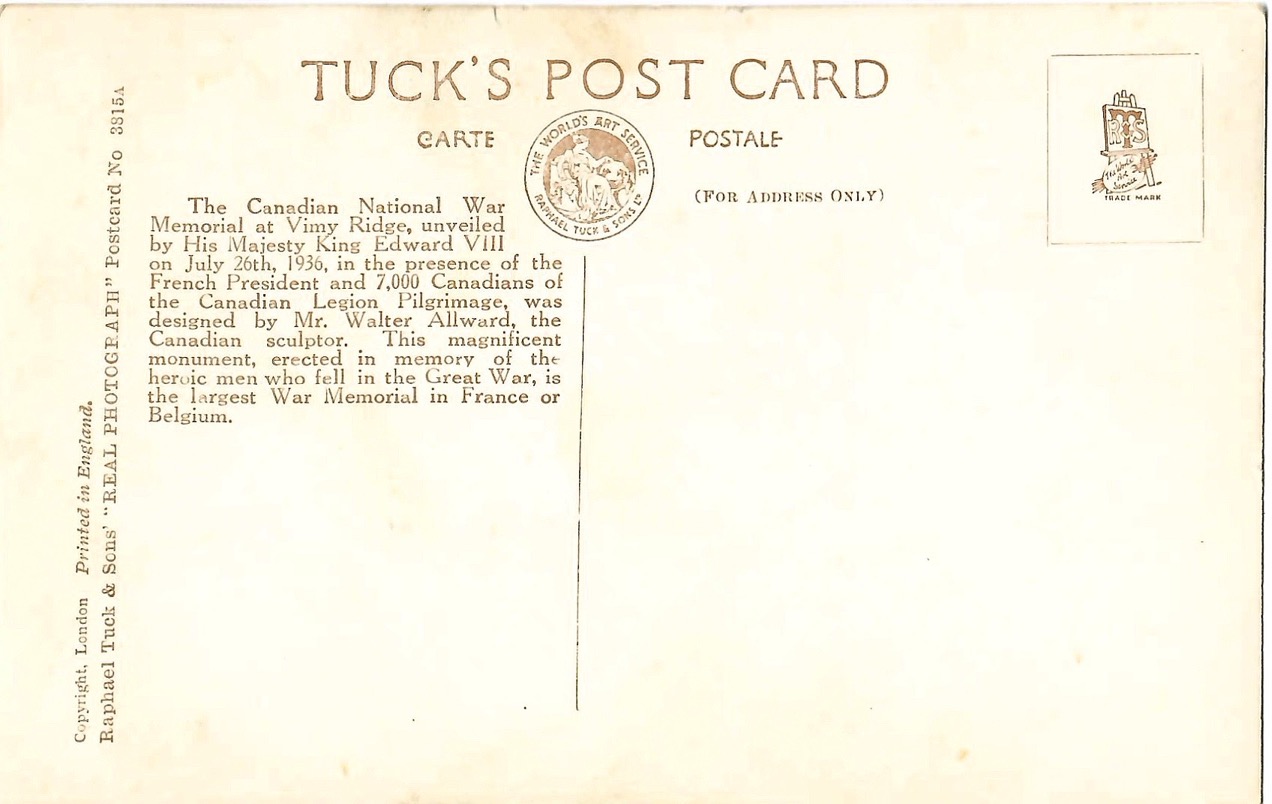
Vimy Memorial Postcard
CCGW Collection


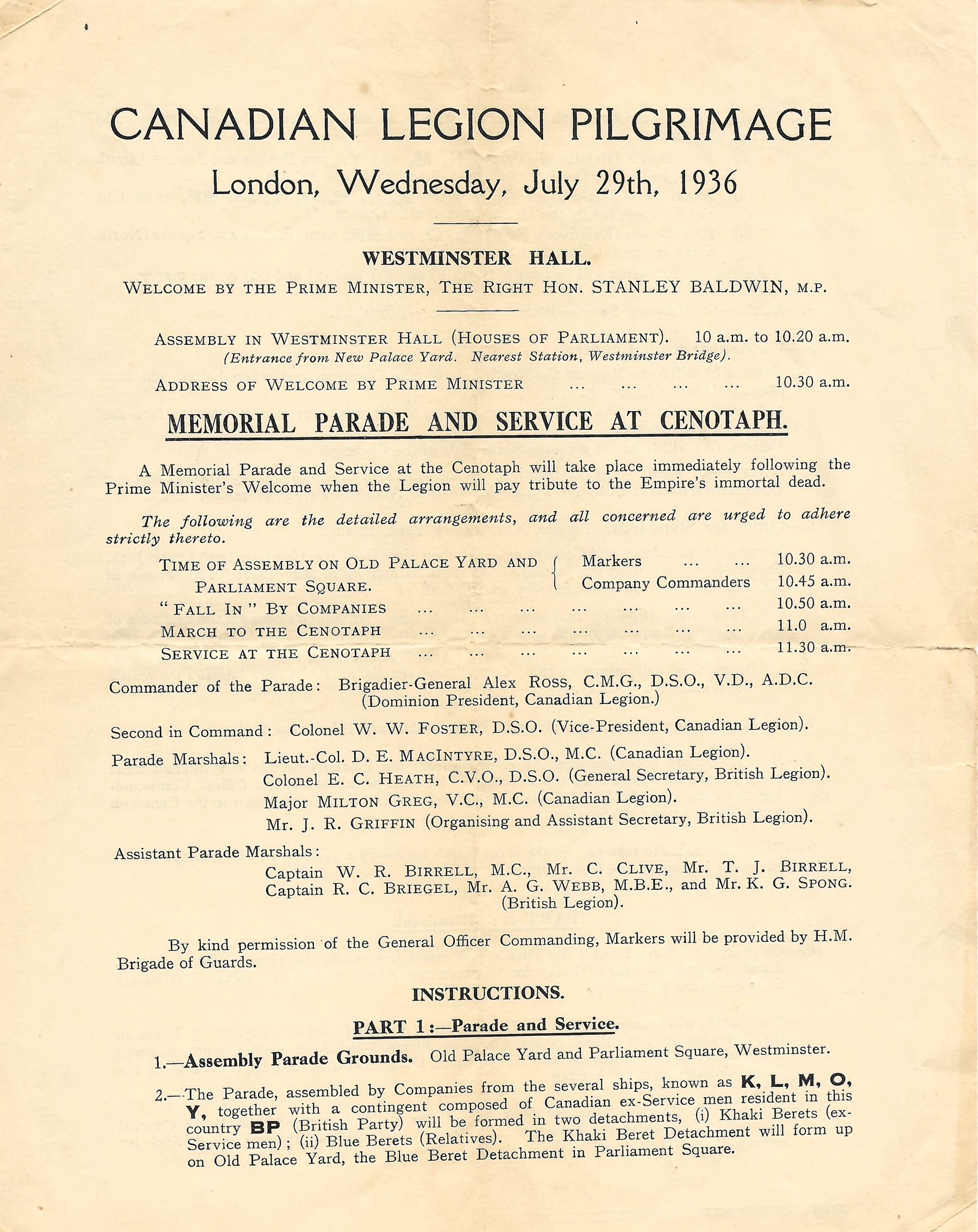
Canadian Legion Pilgrimage Parade Orders
CCGW Collection


Newspaper Clippings
CCGW Collection


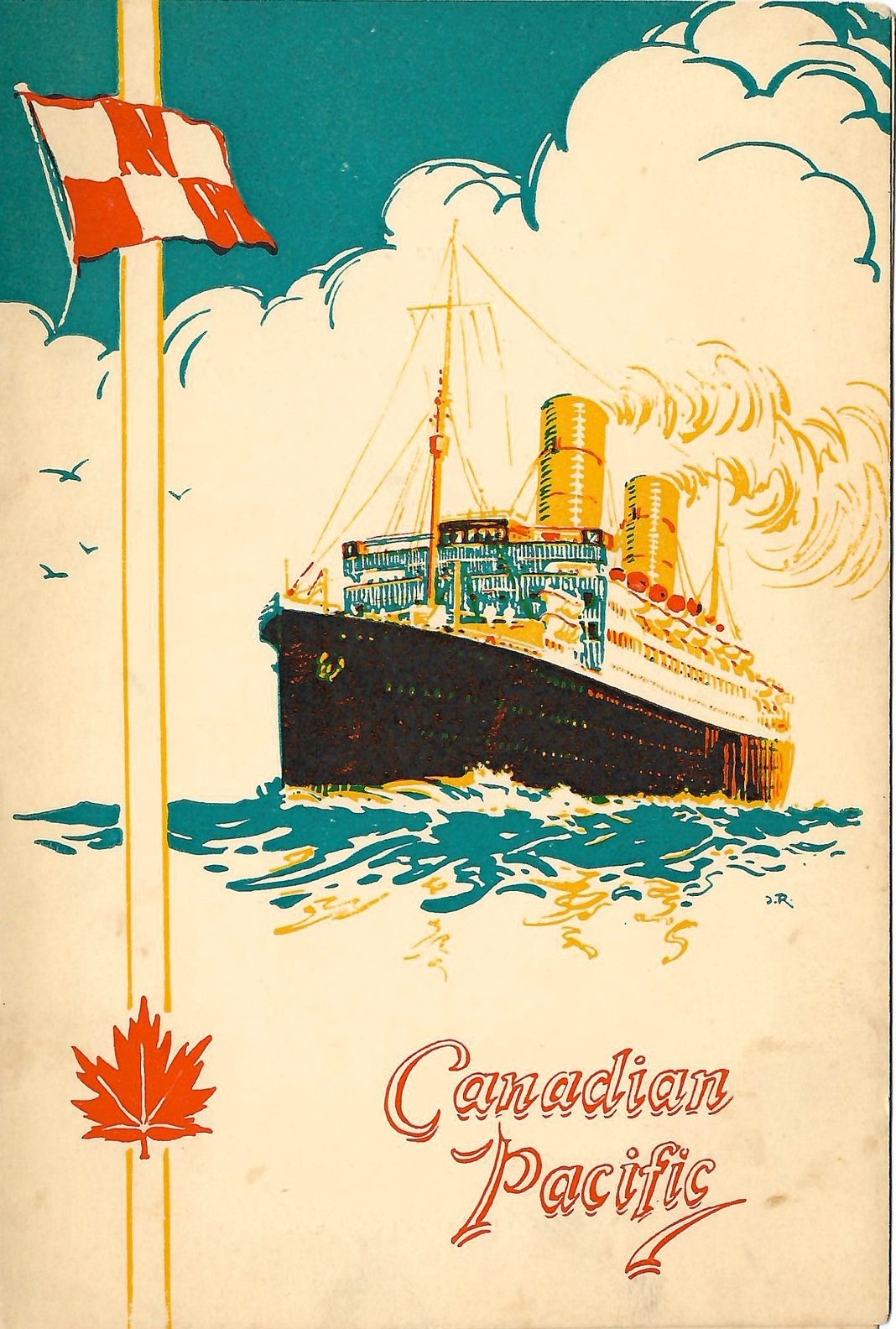
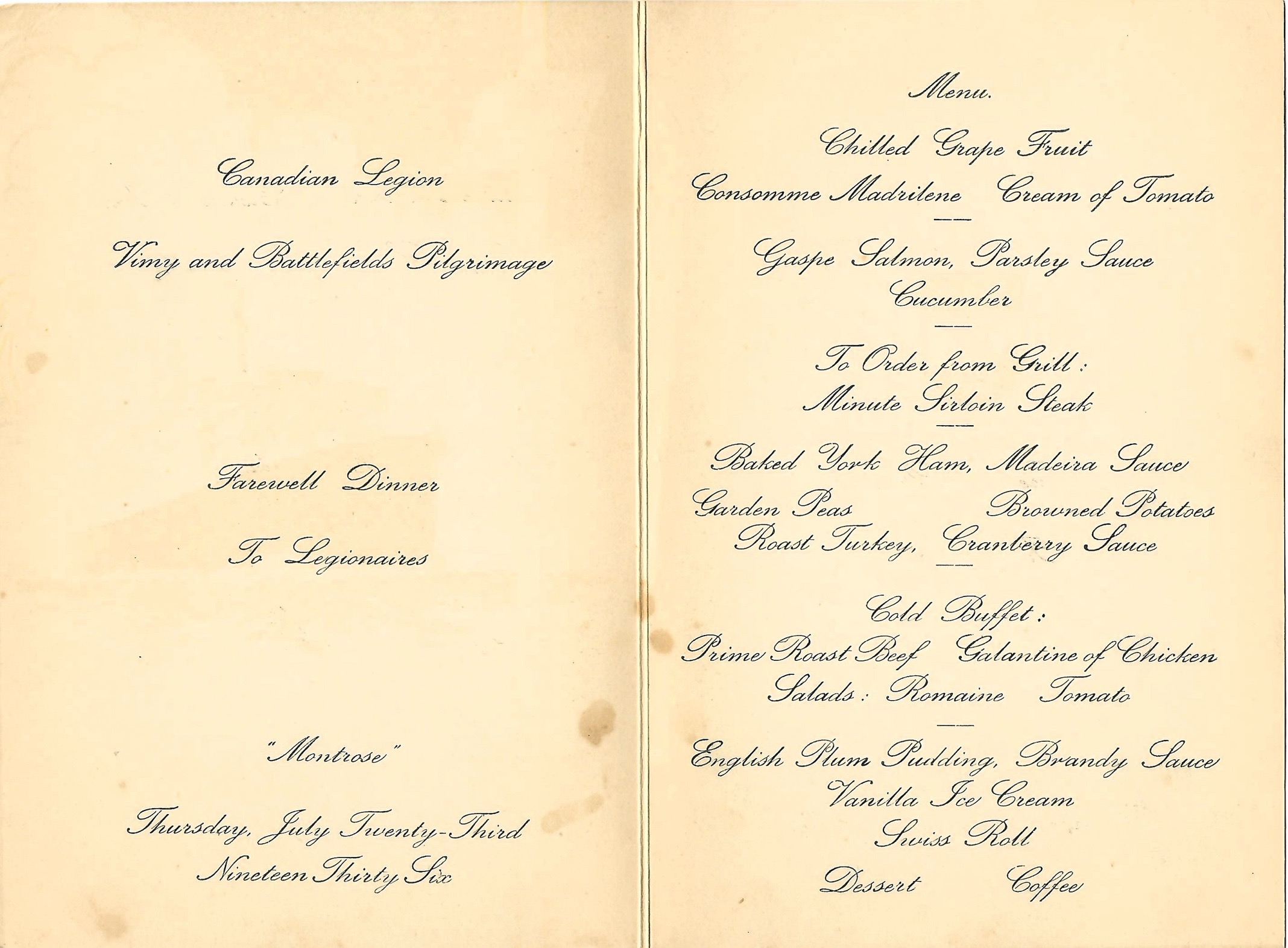
Canadian Pacific Menu
CCGW Collection


Canadian Pacific Menu
CCGW Collection